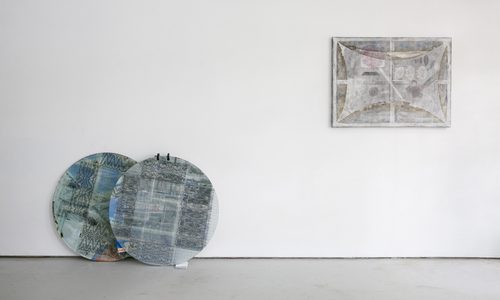
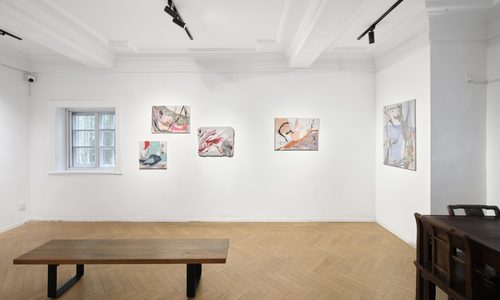
Nancy Cohen and Anna Boothe Breach, 9 x 27 x 15 inches, Glass, 2026. Third View. 9 x 27 x 15 inches. Photo credit of Edward Fausty

Confluence: A Synergetic Vision at UrbanGlass

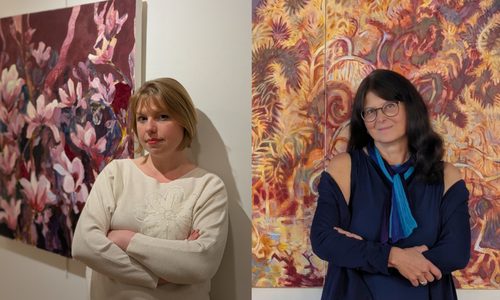
Artists Anna Boothe and Nancy Cohen met more than twenty-five years ago, and that serendipitous meeting grew into a lasting collaboration. Confluence, their current show at UrbanGlass, features their new body of work. It grew out of joint research and material studies they began in 2024 during a Creative Glass Fellowship at WheatonArts in Millville, New Jersey, where they studied the region’s glassmaking history from the 18th century to the present, with emphasis on how the industry affected the local ecology, waterways, and inhabitants. As Dr. Ferris Olin notes in the exhibition essay, glassmakers settled along the Maurice River for the quality of its sand and its route to market. The industry grew alongside Philadelphia’s pharmaceutical companies and their need for glass containers, which helps explain why scientific glass is prominent in this work.

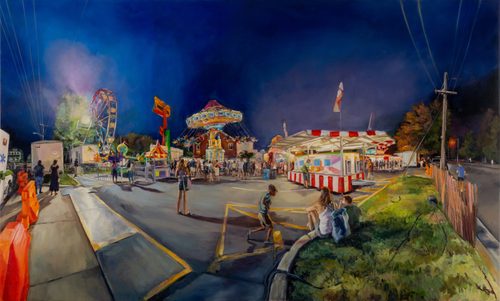
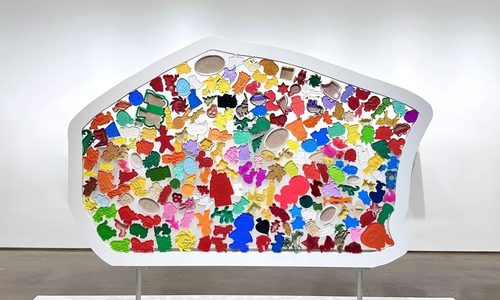
This Candy Has Teeth, curated by Shuhan Zhang, 2026, image Courtesy of Weicang Wang

This Candy Has Teeth: Can Nostalgia Really Comfort Us?

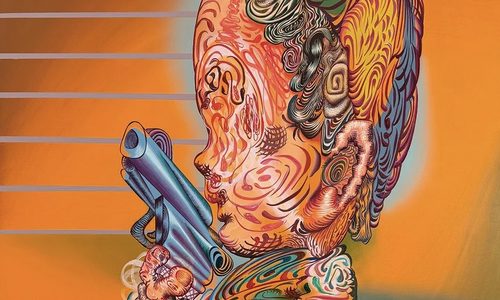
Is nostalgia really a safe space for us to process the uncertainty of the rapidly changing present? This Candy Has Teeth, curated by Shuhan Zhang, features five Chinese artists, Shengjie Jiang, Weican Wang, Jiaqi Mao, Yukun (Chloe) Ba, and Cindy (Zhaoyue) Chen, who move through childhood, memory, and nostalgia in different ways. Together, their works reflect our current desire for nostalgia, a desire that perhaps reveals just how uncertain the present feels. Yet the more we try to grasp onto the soft, safe, familiar places of the past, the more complicated those memories become. If you really delve back into them, they are also full of discomfort: moments of being forced to accept what happened, and the stiffness of a choke at the throat. As the curatorial text suggests, it is a “sensory misalignment”—an apple is sweet, yet hard to swallow.

Diane Burko, Extraction, A Dialogue of Extremes, Installation Featured Image

Diane Burko: Extraction, A Dialogue of Extremes at Rowan

Extraction, A Dialogue of Extremes, Diane Burko’s solo exhibition at Rowan University Museum of Contemporary Art, pairs two bodies of work: Arctic paintings based on NSF-funded climate research and works on Amazon mining and deforestation. The show was created as the research grant’s community engagement component. In this interview, curator Mary Salvante discusses how the exhibition came together, the tension between the two series, how the work uses beauty to address climate change, and what the museum hopes visitors take away.

SPRING/BREAK highlights: Hide and Seek

This year’s theme for SPRING/BREAK Art Show was Hide and Seek. The fair was within this new and exciting office space that felt like a labyrinth at first, but then it evolved into a wonderful journey- meeting new artists and old friends. Full of amazing works and installations, the booths caught my attention through either a detail, a connection, or a wonderful conversation. The themes varied, from Peter Gynd’s focus on the joys of the everyday to Juan-Manuel Pinzon and Matthew Logsdon’s connections through material, action, and discovery. David Howe and Jesus Benavente’s team brings urgency and humor, showing how decisions from up high affect our everyday lives. My experience of the fair concluded with the works of Noa Charuvi and Shmuel Charuvi, exploring connections to a sense of place and ways of viewing the world, often influenced by the works of family, while Braden Bandel’s paintings and drawings bring us into another world entirely- allowing us a place to rest and contemplate. 

Danny Balgley, installation view, Wexler Gallery, Courtesy of Wexler Gallery, Philadelphia

Pentimento: Danny Balgley at Wexler Gallery

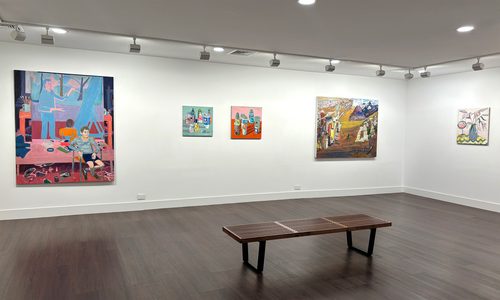
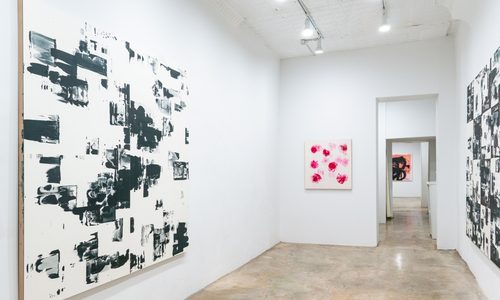
The abstract paintings in Pentimento, the debut solo exhibition at Wexler Gallery in Philadelphia by New York artist Danny Balgley, live up to their title. Like geological strata, the urban palimpsest of peeling billboards and weathered facades, or memory itself, their layers let traces of earlier marks show through, revealing themselves gradually, the longer we look.

Gamaliel Rodríguez, Lo grabado de lo vivido (What is etched from what has been lived), Pace Prints, 2026. Artwork © Gamaliel Rodríguez. Photo by Garrett Carroll.

Gamaliel Rodríguez: What is etched from what has been lived at Pace Prints

At first glance, Gamaliel Rodríguez’s monoprints look like postcards of tropical lands: saturated palms and skies that evoke Caribbean tourism imagery. The paradise turns more industrial and quite specific as you look longer: an ethanol plant in Medina, New York, the Bacardi distillery in Cataño, Puerto Rico. Following Rodriguez’s first solo show with Pace Prints, we discussed this new body of work.

Painting in the Age of Apocalyps

Rebecca Morgan at Asya Geisberg Gallery: Traversing the Apocalypse 

Rebecca Morgan’s exhibition Painting in the Age of Apocalypse is a bit of a roadmap for viewers. Morgan tackles the question of how to present images in the face of a raging political landscape,  how to keep moving forward, and how to maintain oneself and some humor about it all. And most importantly to me, how to open up one’s painting style and allow both the work and the process to support you through this tumultuous and often unbelievable terrain we may find ourselves within. In this exhibition, Morgan engages potent themes from all her eras: sympathy for her rural background, feminist reappraisal of art history, and an unbridled excitement at infusing humor and technical prowess into her critique. Here, Morgan fuses all of these themes well, all the while showing us a fresh, looser style of painting that captures the frenetic energy of the moment.